

There is a specific feeling you get when exploring a city, the mundane becomes interesting at 17km an hour. For me, the defining moment came after spending years mapping the fragmented shared paths of Sydney.
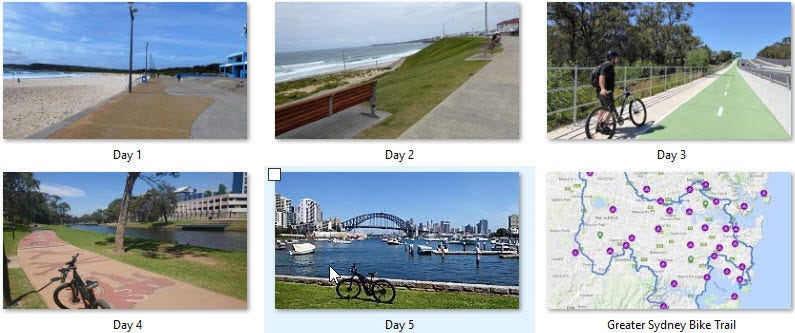
Reaching the Sydney Harbour Bridge to complete the very first loop of what is now the Greater Sydney Bike Trail (GSBT) was, without a doubt, the best feeling in my time mapping this city. It was a massive sense of completion—the realization that you can actually encircle this sprawling metropolis largely on its own terms.
Connecting the Dots
The GSBT wasn’t really “built” in the traditional sense; it was discovered. Lots of adding rides to a map, classifying them (into purple for great, olive for decent and grey for experienced only) and staring at the map till pop, there it was.”
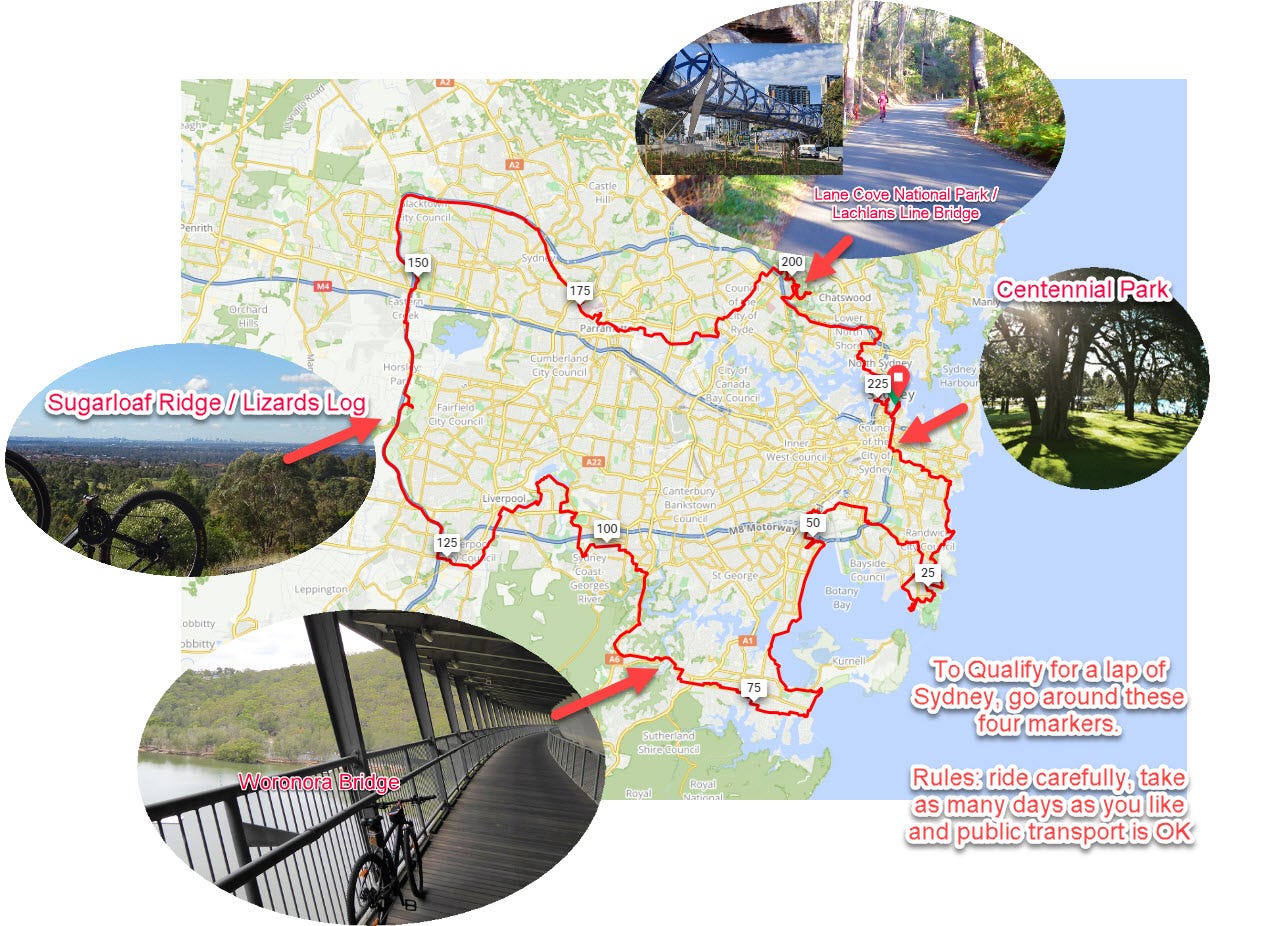
Thankfully this was all fun. There was years spent learning the individual shared paths—the well-trodden routes through Centennial Park, the windswept trails around Botany Bay, the engineering marvel of the M7 Cycleway, and the green corridor of Lane Cove National Park.
The easy rides in the cycling mirror, it then came to finding the missing links. It was about hunting down those short, 2-3km sections of quiet back roads that could connect the longer obvious longer paths into a cohesive journey. Result: The GSBT and the Orbital.
The Reality of the Ride
The motivation for riding 230km around the city’s edge is exploration. It’s about discovering parts of Sydney you didn’t know existed right under your nose. But let’s be honest about the terrain—it’s real Sydney riding.
While much of the M7 Cycleway is fully connected tarmac, the GSBT has character. You will encounter the infamous “bouncy” brick paths of Ramsgate and the occasional tree-root bump through the older sections of Chipping Norton.
And while people often say Sydney bike trails are “generally flat,” this particular loop includes significant dips along the many waterways it crosses. Those dips add up to over 2,000m of climbing on the Classic route. It’s a challenge earned, not given.
Whether you tackle it in one epic day or spread it across a few weekends using the train network, the goal is that final sense of completion.
Ready to Ride?
This story is the “why.” If you are ready for the “how,” I have consolidated everything you need—the official maps, GPX files, train logistics, and the rules of the “Four Marker” challenge and the Facebook link where you will 4000 other motivated riders —into a single master guide.
🚲 View the Official GSBT Master Guide
